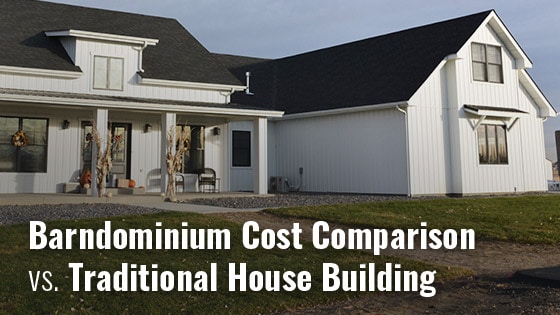
There has been a rising trend in homeowners opting for barndominiums vs traditional homes recently. Capitalizing on a nostalgic, farm-style aesthetic, yet integrating comfortable living quarters with lush and modern amenities, barndominiums have certainly carved out a well-deserved niche in the home design scene.
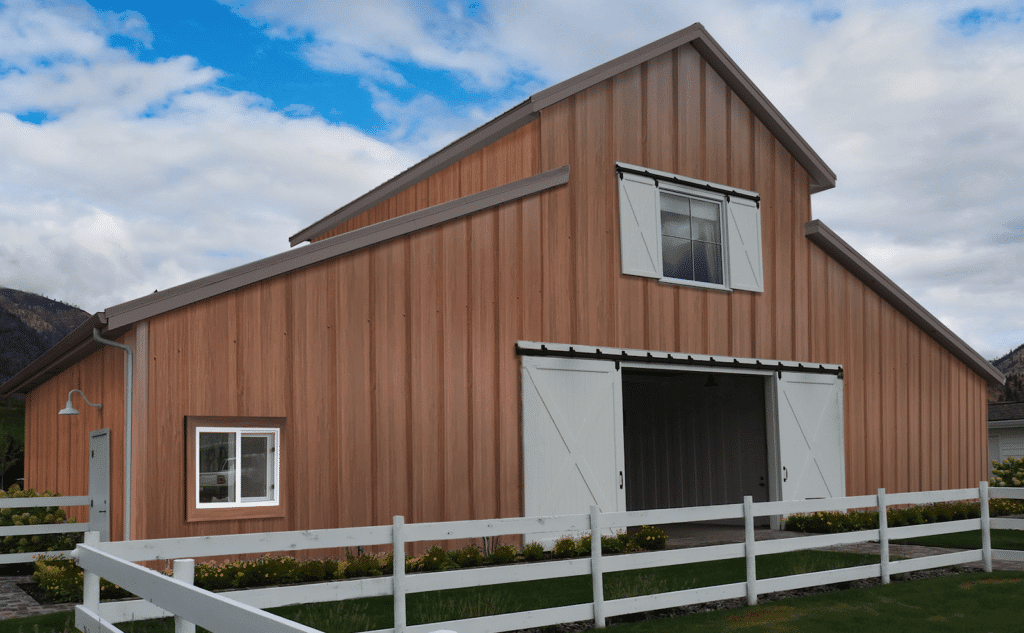
It’s important to break down the numbers when comparing barndominium costs vs house expenses. To do so efficiently, it’s best to account for what makes these two structures similar as well as what sets them apart.
Barndominium vs House Cost Comparison
Take a look at some of the factors to consider when weighing the cost of a barndominium vs a traditional house:
Design Differences that Affect Cost of Barndominium vs House
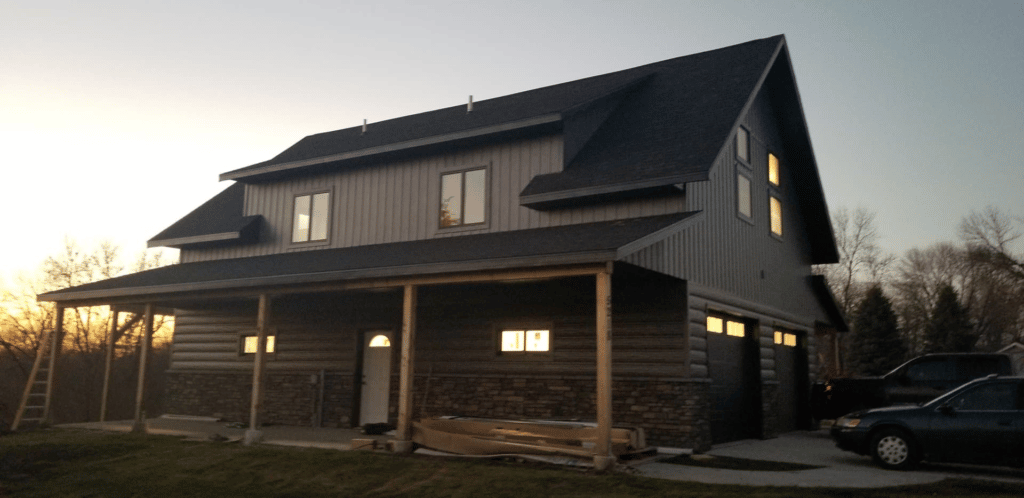
For those who aren’t familiar with this popular hybrid building concept, a barndominium is a structure that combines the classic exterior design features of a barn with modern livable spaces throughout the interior. Most barndominiums are open-concept, featuring large multi-purpose rooms that can be rearranged and used in a variety of ways. Maximizing interior space is one of the key components of barndominiums. This open-concept design can be a cost advantage, as multi-purpose spaces can be used for different activities, cutting down the need for additional square footage.
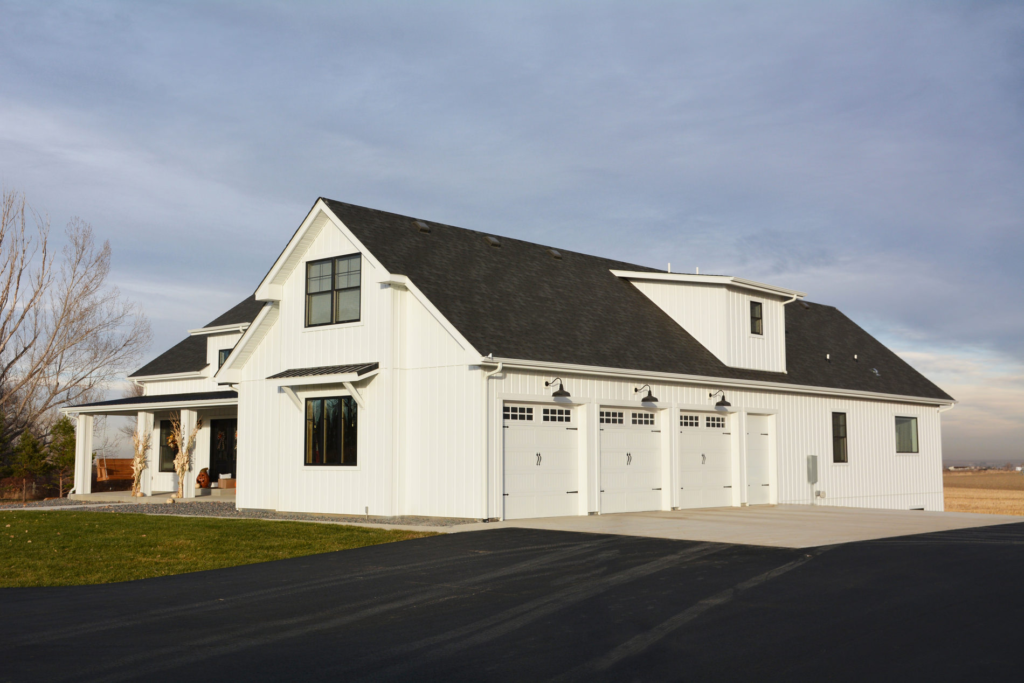
Vertical wood-style siding is another key feature of barndominiums. Some traditional homes are also seeing a renewed interest in board and batten siding and other farm-style exteriors, and builders still have more siding styles to choose from when building a traditional home vs. a barndominium. However, there are many more durable options for getting the wood-look of a barndominium than ever before, and lots of homeowners are opting for more durable products, like TruLog steel siding. Durable siding options like these can cut down on barndominium maintenance and repairs, ultimately saving money in the long run.
Renovation vs. New Build
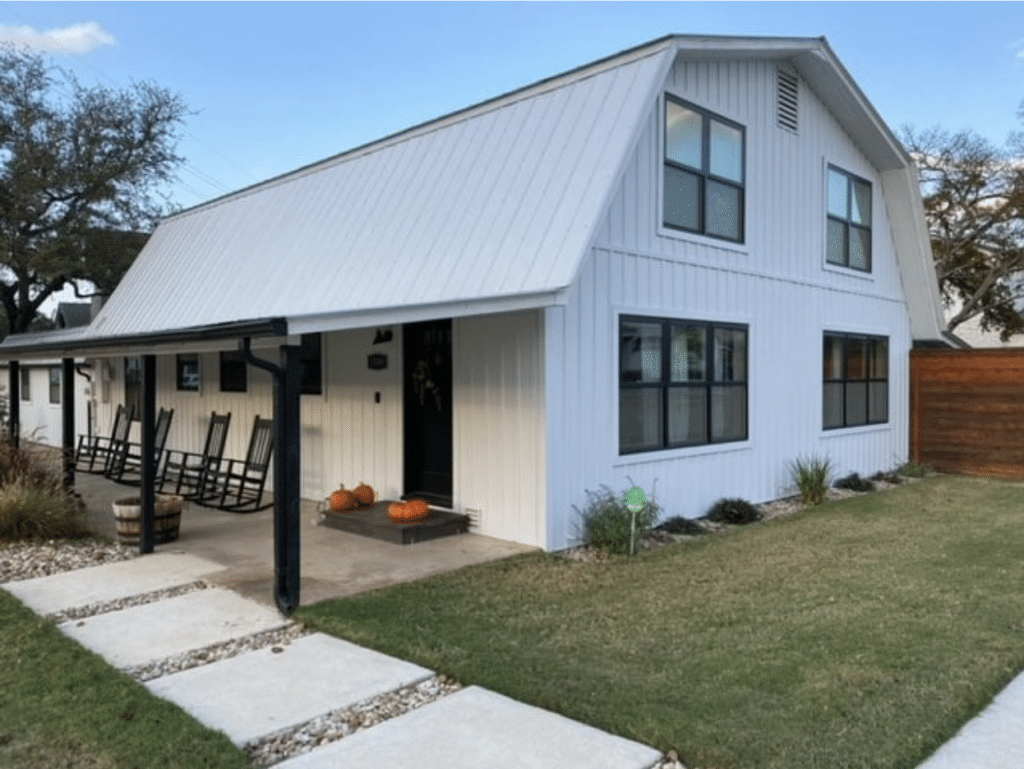
A barndominium can be created in two ways: either undergoing massive renovations to convert an existing barn into a livable structure or by creating an entirely new building from the ground up. Both strategies offer unique benefits and challenges which can ultimately affect cost calculations when comparing barndominium vs. house building projects.
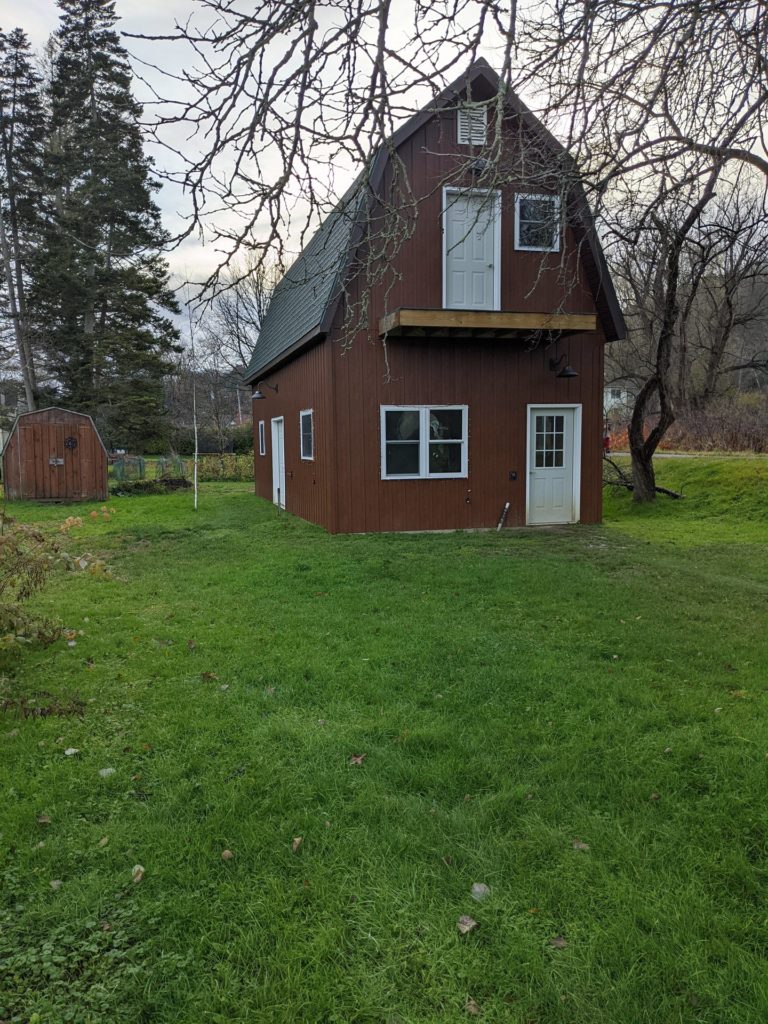
For example, those working with an existing barn can easily save thousands of dollars by using the existing foundation and walls, turning renovation efforts towards the interior. In this situation, calculating the cost of a barndominium vs. a traditional house project certainly turns in favor of the barndominium when working with an existing structure that is architecturally sound.
Ready-Made Barndominium Kits
The rising interest in barndominiums has spawned another option for those who don’t feel a spark of inspiration to design their own structure. Ready-made barndominium kits are a more affordable option for having a barndominium on the property in a short period of time. Some of these ready-made barndominium offers actually deliver a pre-built barndominium structure to the property, drop it off, and let you take care of the rest. Others provide all the materials needed to construct a barndominium according to the included design.
Basic barndominium kits are a great option for individuals who want to hit the ground running as soon as possible and for those looking to cut down on costs. One of the lowest prices on the market for barndominium kits works out to be about $20 per square foot, which is incredibly more affordable than producing an original design and hiring contractors to get it done.
Cost of Barndominium vs. Traditional House
Calculating barndominium cost vs. house cost can be tricky, but there is a ballpark estimate that builders generally work from. The most common estimate asserts that a new barndominium with basic amenities will cost about $30 to $40 per square foot to build, compared to the cost of building a traditional home is around $100 to $200 per square foot. When building a small structure of around 800 square feet, this cost difference may not seem like a big deal. However, the difference in the cost of a barndominium vs. a traditional house project certainly becomes more apparent when comparing larger structures with 2,000 or 3,000 square feet of living space.
It’s important to remember that this particular estimate illustrates the base price to be expected when comparing barndominium vs. house costs. When building a more luxurious barndominium with high-end features, like granite countertops and sliding glass doors, the estimate can jump up to around $125 per square foot.
Since there is such a huge degree of variation when it comes to features, fixtures, and amenities, it can be difficult to compare the cost of a barndominium vs. house. For most builders, the total costs come out to be relatively comparable. The numbers are merely estimates for general structures, and the final cost per square foot doesn’t necessarily account for all the stylistic design components and extra commodities that homeowners can choose to include in their plans.
Labor Costs
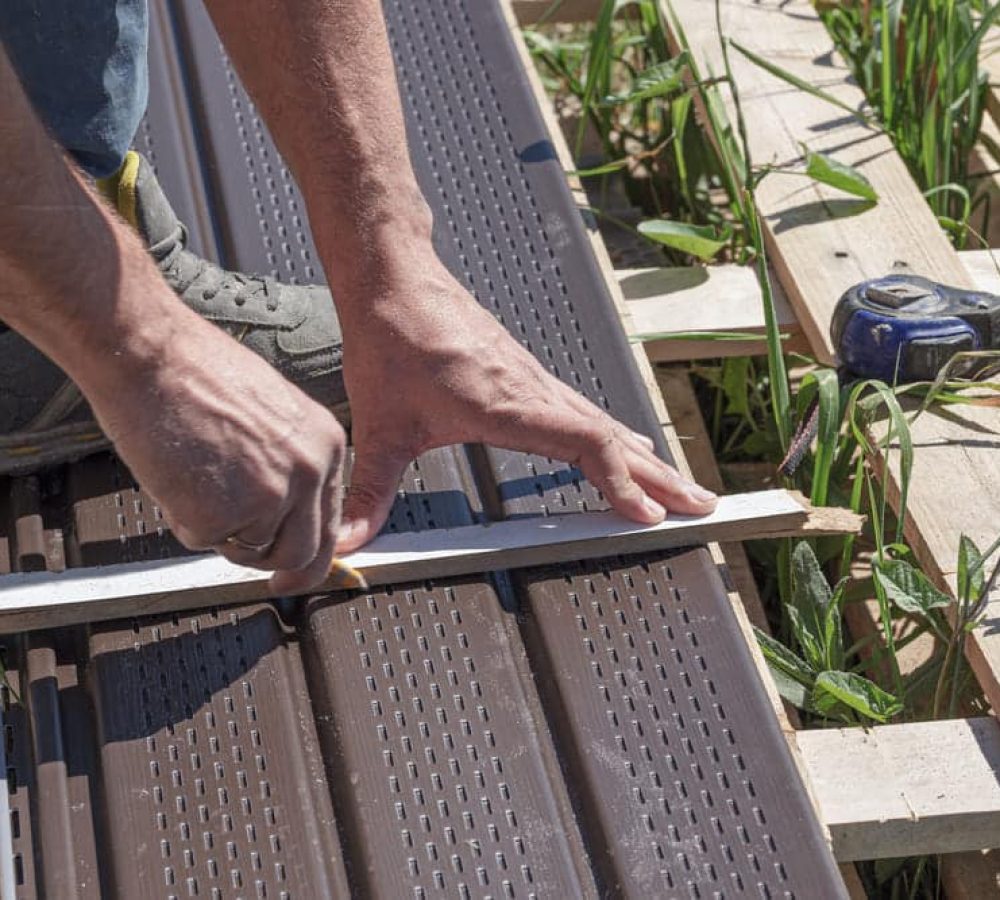
Labor costs can influence which structure, barndominium vs house, is more cost-effective, and the materials play a big role. TruLog’s board and batten siding, commonly used for modern barndominium exteriors, simplifies installation with an easy-to-use design that allows individual panels to lock together securely. Compare it to a brick and mortar exterior for a traditional brick home, and the answer is clear: the barndominium’s siding won’t require nearly as much labor. Modern material swaps can save builders both time and money.
Our Pick: Barndominium Construction
All in all, when comparing barndominium vs. traditional house building projects, there is an incredible amount of variation possible. Sticking to modern materials, using existing barn structures, and maximizing multi-purpose living spaces are a few of the possibilities that allow barndominiums to come out on top.
Contact Trulog today for more information on cost-effective, wood-look barndominium siding products.